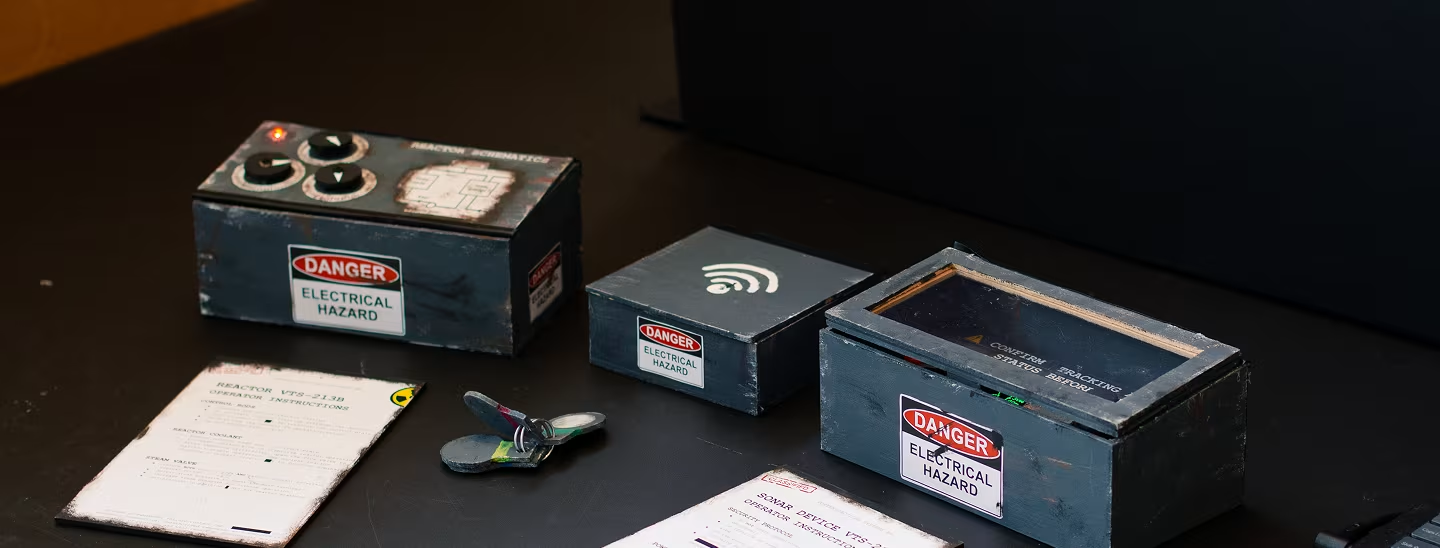
Final
Transmission
School Project
Summary
An immersive escape room experience, exploring wireless device networks and collaborative player interactions.
Role
Conceptualizing core mechanics, Programming interactions, Physical fabrication
Tools
Processing, Arduino, Woodworking tools (bandsaws, sanders, drill presses)
Duration
4 weeks, Spring 2025
Team
Jonah Van Kessel, Vina Setiawaty, Rohan Wagh
The Design Brief
We had to design a connected escape room with multiple components that interact with each other across a shared wireless network. The experience had to be immersive, and promote collaboration between at least two players.
Ideation
Imagine this: You're trapped in a sinking submarine. There’s one other person onboard, but you can't see them, and can't speak to them. To get out of this situation, you have to solve interconnected puzzles.
This is the thematic idea and the core game mechanic I introduced, an escape room where the two players are separated and can’t communicate with each other at all. All coordination had to happen through the devices (puzzle modules): basic colour signals, audio cues, and text input.
The hypothesis was that players would improvise their own communication systems on the fly, creating an emergent and personal problem-solving experience. We wanted the constraint to feel meaningful and uniquely challenging.
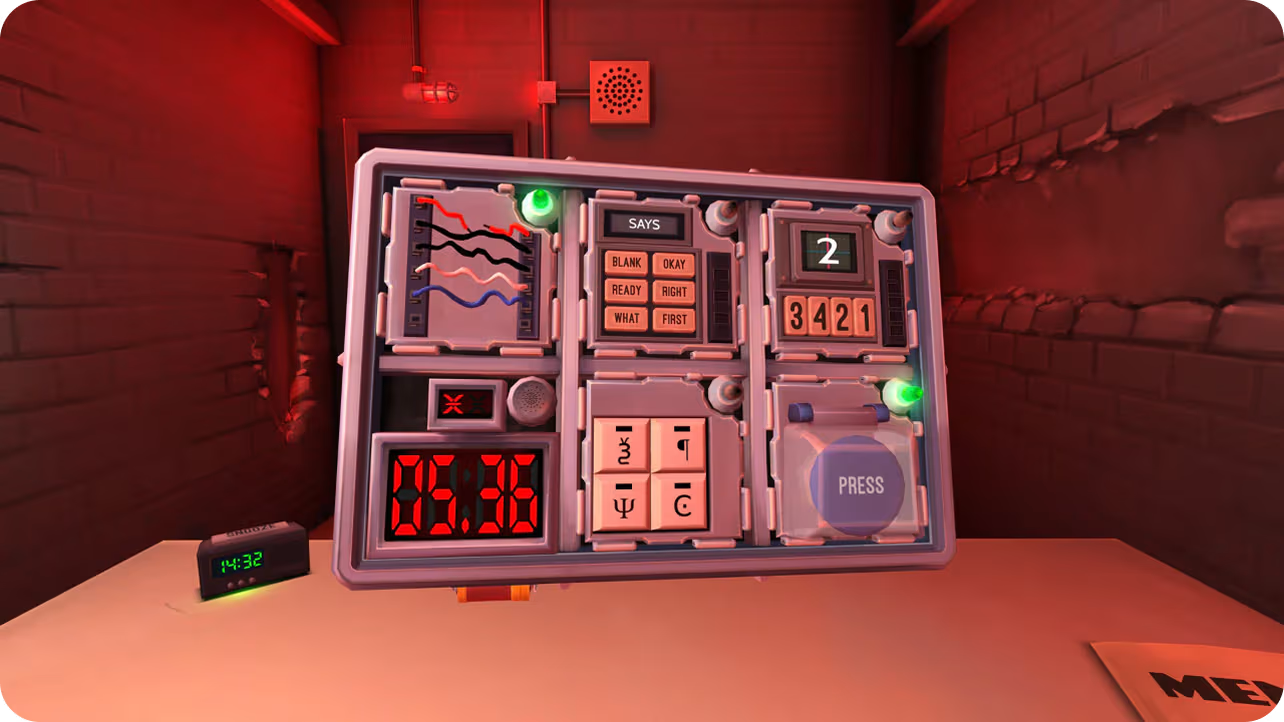
The inspiration for this idea came from games such as Keep Talking and No One Explodes. One player with a manual and another with a bomb must coordiate how to solve the puzzles on the bomb without seeing each others tools.
System Design
I mapped the device ecosystem, defining the logic linking both players' interactions to puzzle completion.
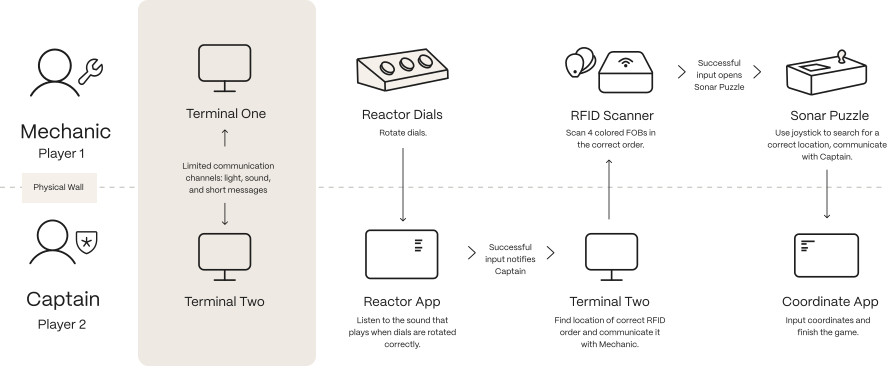
One of my primary contributions for this project was establishing the wireless communication protocol between all the devices, using OOCSI (a middleware prototyping wireless communication architecture). It was my first time connecting multiple Arduino modules together to create a fully connected IoT system.
I also owned the full design of the RFID sensor module, which was one of the 3 main modules used needed to complete the puzzles. The ESP32 module was connected to a RFID sensor and an assortment of tags, which transmitted data to the other modules to indicate if it read the codes in the correct sequence.
Fabrication and Art Direction
A consistent art direction shaped fabrication and finishing to support the submarine theme.
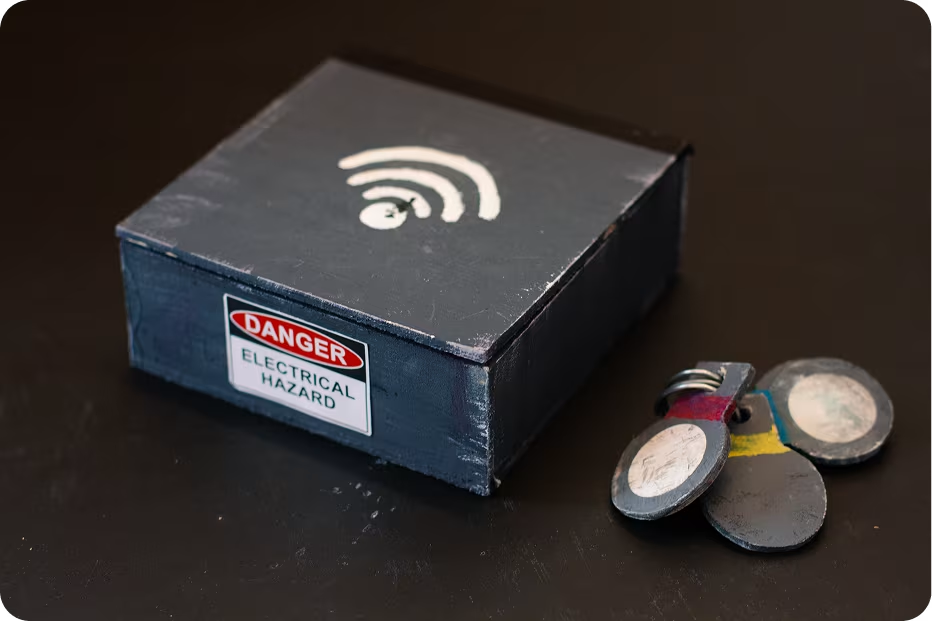
For all of the devices, I used woodworking tools such as bandsaws and sanders to create the tags and the housings, and used sandpaper and weathering painting techniques to create a worn appearance.
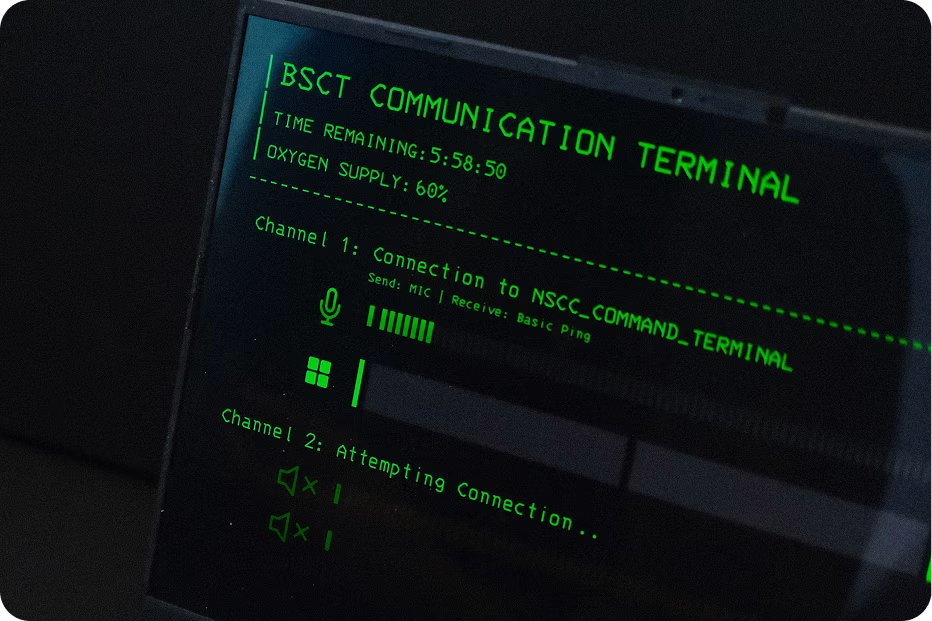
I also programmed the interface for the mechanics terminal in processing. The UI was inspired by 80’s home HiFi systems and car digital dashboards, which helped make a more immersive theme.
Play Testing
We ran play testing sessions with three groups of people who had no prior knowledge of the puzzles.
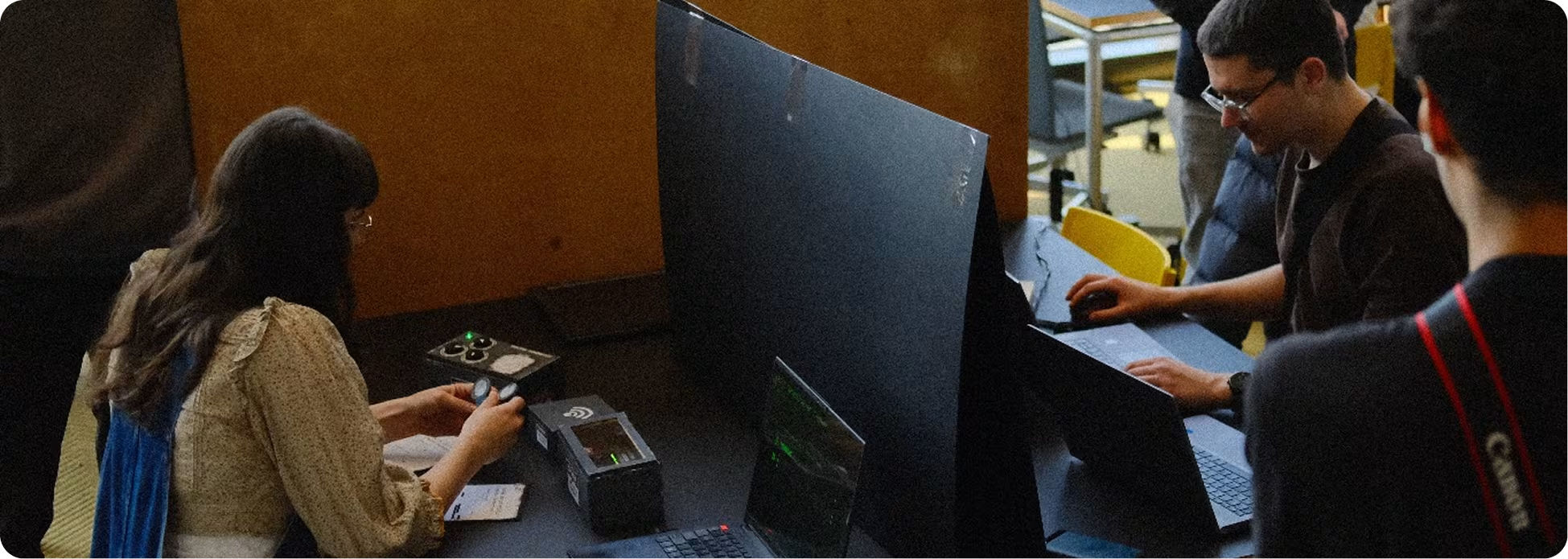
The puzzles were too difficult, especially with the lack of communication channels available.
For all of the devices, I used woodworking tools such as bandsaws and sanders to create the tags and the housings, and used sandpaper and weathering painting techniques to create a worn appearance.
Silence made the experience feel stressful, not just challenging.
I also programmed the interface for the mechanics terminal in processing. The UI was inspired by 80’s home HiFi systems and car digital dashboards, which helped make a more immersive theme.
Final Escape Room
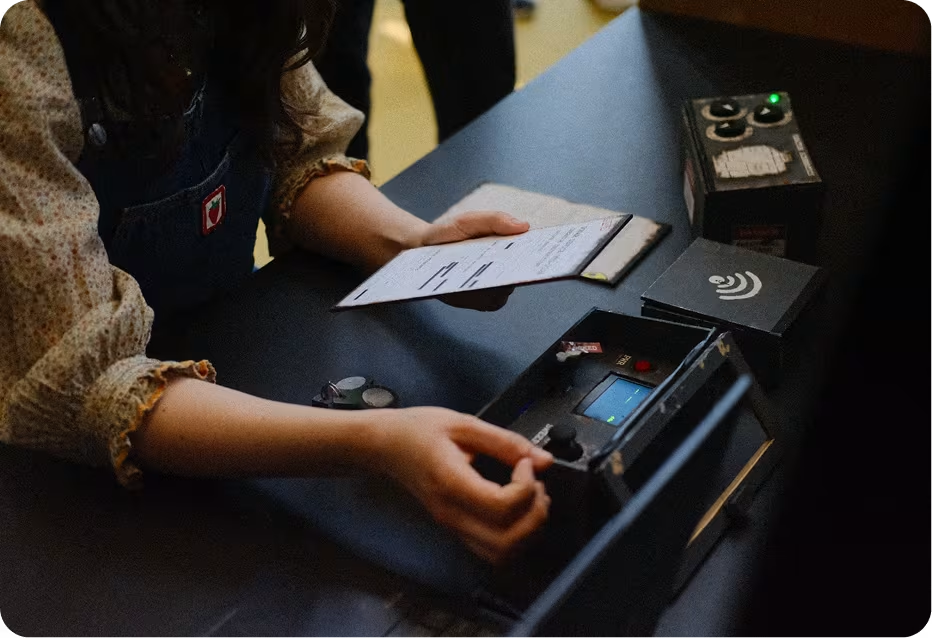
In the final iteration, we allowed players to converse and collaborate while still keeping their puzzles hidden from each other. Completion rates improved, and the experience felt appropriately challenging and fun rather than frustrating.
Takeaways
Test with strangers, early and often
As a designer, it’s easy to become familiar with my understanding of how the game (or any product) should be used, assuming that others will think about it in the same way, even if they don’t have the same context as me. If I were to do this project again, I would spend an equal amount of time testing with people outside of the team as I spent building the modules.
Connected systems require end-to-end experience thinking.
Designing networked devices means accounting for every state: what happens when a puzzle is solved, when it's failed, when signals are ambiguous. Working on the cross-device communication taught me how quickly edge cases multiply in IoT contexts.